

2026 COMPENDIUM OF LESSONS LEARNED
Executive Summary
The Generation Equality Compendium of Lessons Learned synthesizes five years of implementation experience under Generation Equality (2021-2026), documenting how a feminist, intergenerational and multi stakeholder partnership model translated global ambition into system-level changes, policy influence, financing shifts and accountability practices. Convened by UN Women, Generation Equality established a shared architecture for leadership, coordination and accountability across governments, philanthropies, multilateral organizations, the private sector, civil society and youth led organizations.
Drawing on implementation data, accountability reporting and financial analysis across the six Action Coalitions and the Global Compact on Women, Peace and Security and Humanitarian Action, the Compendium reflects lessons emerging from more than 2,500 commitments, USD 50.3 billion in pledged financing and over USD 21 billion in reported expenditures. It captures progress across priority areas and contributed to policy reforms, strengthened coordination and increased political visibility for gender equality.
The Compendium highlights that accountability, predictable financing, shared leadership and data-driven learning strengthen impact, while power asymmetries, underfinancing, bureaucratic constraints and uneven reporting capacity continue to limit sustainability and lasting systems change.
Key Findings
- Generation Equality demonstrates that accelerating gender equality requires not only stronger commitments, but fundamentally different ways of working together.
- Durable impact depends on system level integration rather than isolated interventions.
- Feminist movements and youth leadership consistently are key drivers of legitimacy, accountability and reform.
- Financing is both a major achievement and a central learning area.
- Accountability systems designed for learning and decision making deliver stronger results than compliance driven approaches.
- Looking beyond 2026, the central lesson is that collective ambition must be institutionalized to endure.
Recommendations and Way Forward
Institutionalize multi-stakeholder governance as a core system function
Embed feminist, intergenerational and multi-stakeholder partnership models within UN system architecture, national coordination mechanisms and global governance processes. Establish clear mandates, decision-making structures and accountability lines to sustain collaboration beyond time-bound initiatives.
Resource and formalize convening as a governance responsibility
Recognize convening, coordination and partnership stewardship as core institutional functions. Allocate predictable financing, clarify ownership and strengthen facilitation capacities to maintain alignment, coherence and collective action at scale.
Rebalance power towards feminist movements, youth and local actors
Institutionalize participatory governance by ensuring that feminist organizations, youth-led groups and grass-roots actors act as agenda-setters and accountability drivers. Expand direct, flexible and accessible financing to support sustained leadership and engagement.
Transition to system-integrated financing for gender equality
Shift from project-based funding towards predictable, multi-year financing embedded in national budgets and public financial systems. Expand gender-responsive budgeting and develop tracking mechanisms that ensure resources reach feminist, youth-led and grass-roots organizations.
Strengthen accountability as a tool for learning, not only reporting
Integrate accountability systems into planning, budgeting and policy cycles. Simplify reporting, improve data quality and invest in analytical capacity to ensure that data inform decision-making, course correction and collective action.
Build data systems that capture equity, outcomes and transformation
Improve the availability, comparability and use of disaggregated data, while expanding tools to measure qualitative change, including power shifts, participation and partnership dynamics. Align data systems with national and global frameworks to ensure sustainability.
Scale whole-of-government and cross-sectoral approaches
Promote integrated policy frameworks that align gender equality across sectors, including economic policy, climate action, digital transformation, peacebuilding and humanitarian action, to reduce fragmentation and increase systemic impact.
Protect enabling environments for feminist and youth leadership
Strengthen legal, political and institutional protections for civic space, including safeguarding women human rights defenders and supporting enabling conditions for participation in decision-making at all levels.
Good Practices
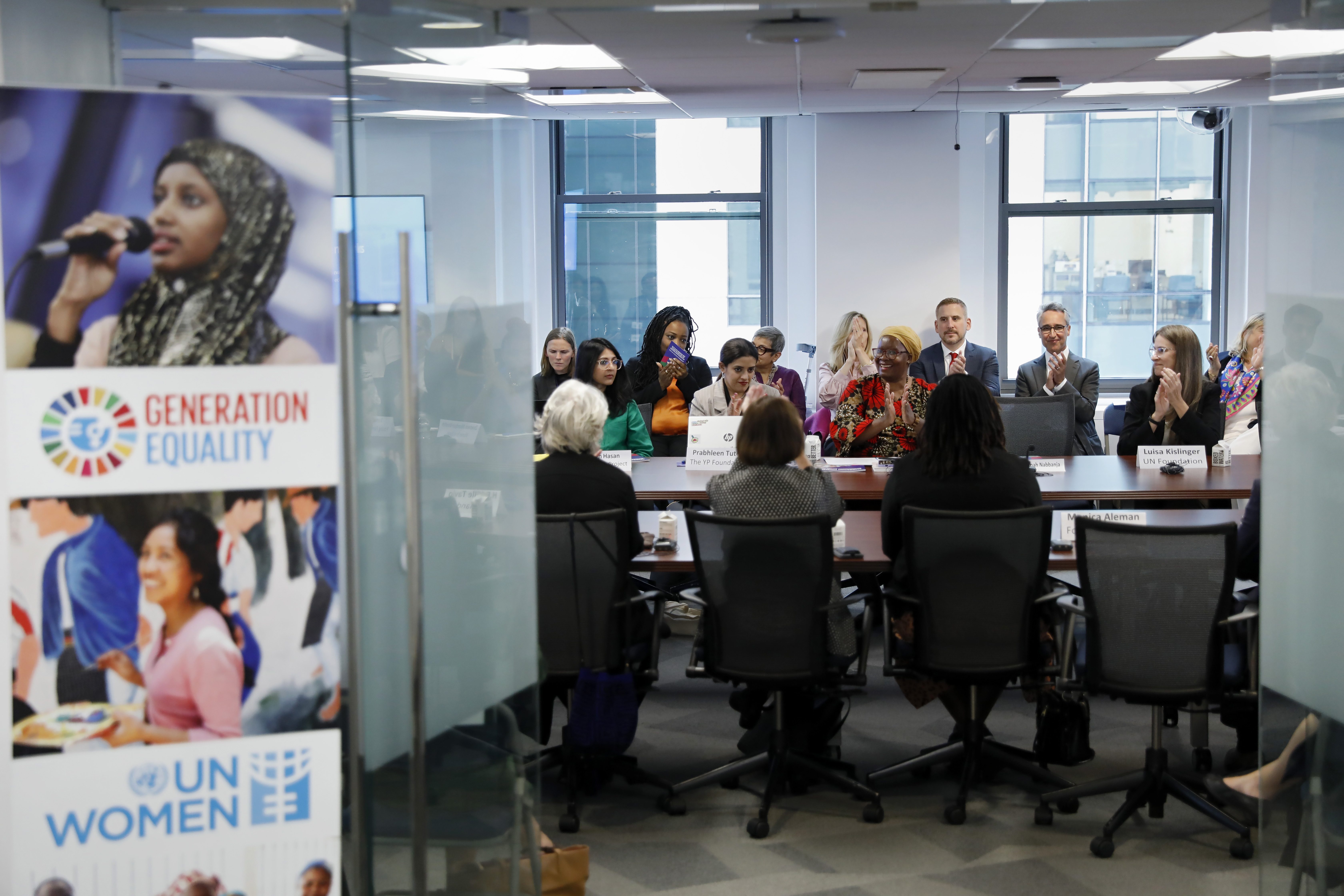
The Generation Equality multi-stakeholder partnerships approach as an innovative leadership model
Cross‑AC collective leadership: When threats emerged to repeal The Gambia’s 2015 ban on FGM, Generation Equality partners activated coordinated leadership across the FML, GBV and BA‑SRHR Action Coalitions. Feminist and youth‑led organizations aligned analysis, messaging and advocacy across coalitions, linking locally-led mobilization with global political engagement. UN entities and governments supported amplification through Generation Equality channels without displacing movement leadership. Established cross‑coalition relationships and legitimacy enabled rapid, coherent action that contributed to defending the law.
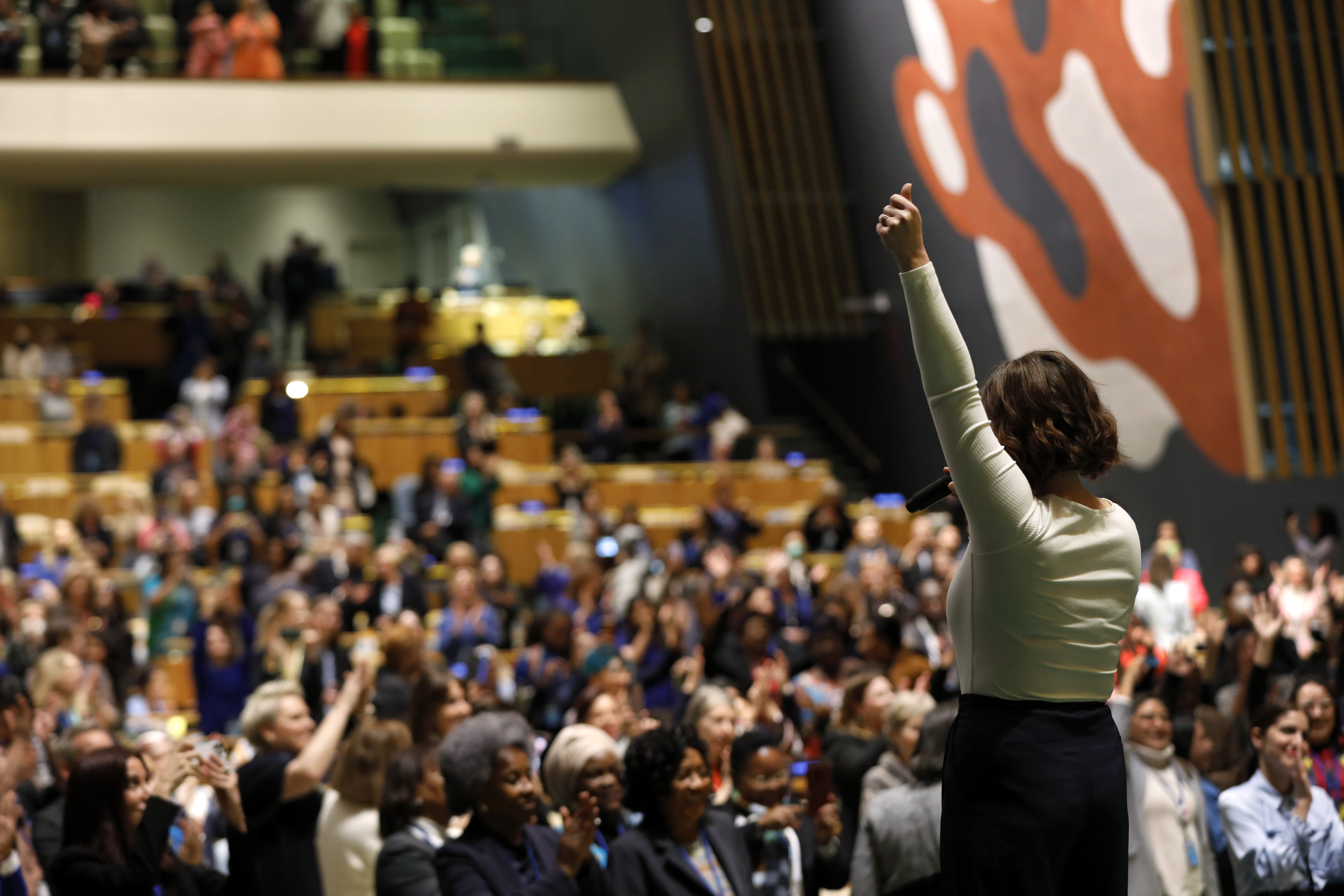
Convening power and partnership-building
Effective convening at scale requires clear ownership and stewardship to sustain collaboration. Experience showed that multi‑stakeholder partnerships do not sustain themselves through goodwill alone and require explicit responsibility for convening, coordination and follow‑up. Where this was absent, stakeholders tended to revert to existing bilateral partnerships or parallel networks.
- Regular, intentionally curated convenings at global and regional levels, such as Action Coalition Leader meetings, regional dialogues and WPS‑HA Compact symposia (e.g. Nairobi and Geneva), maintained momentum, shared learning, and reinforced collective priorities across diverse actors and geographies.
- In Kenya, Tanzania and Rwanda, national and subnational steering committees aligned global commitments with national and local planning, strengthened coherence across levels and embedded shared decision making.
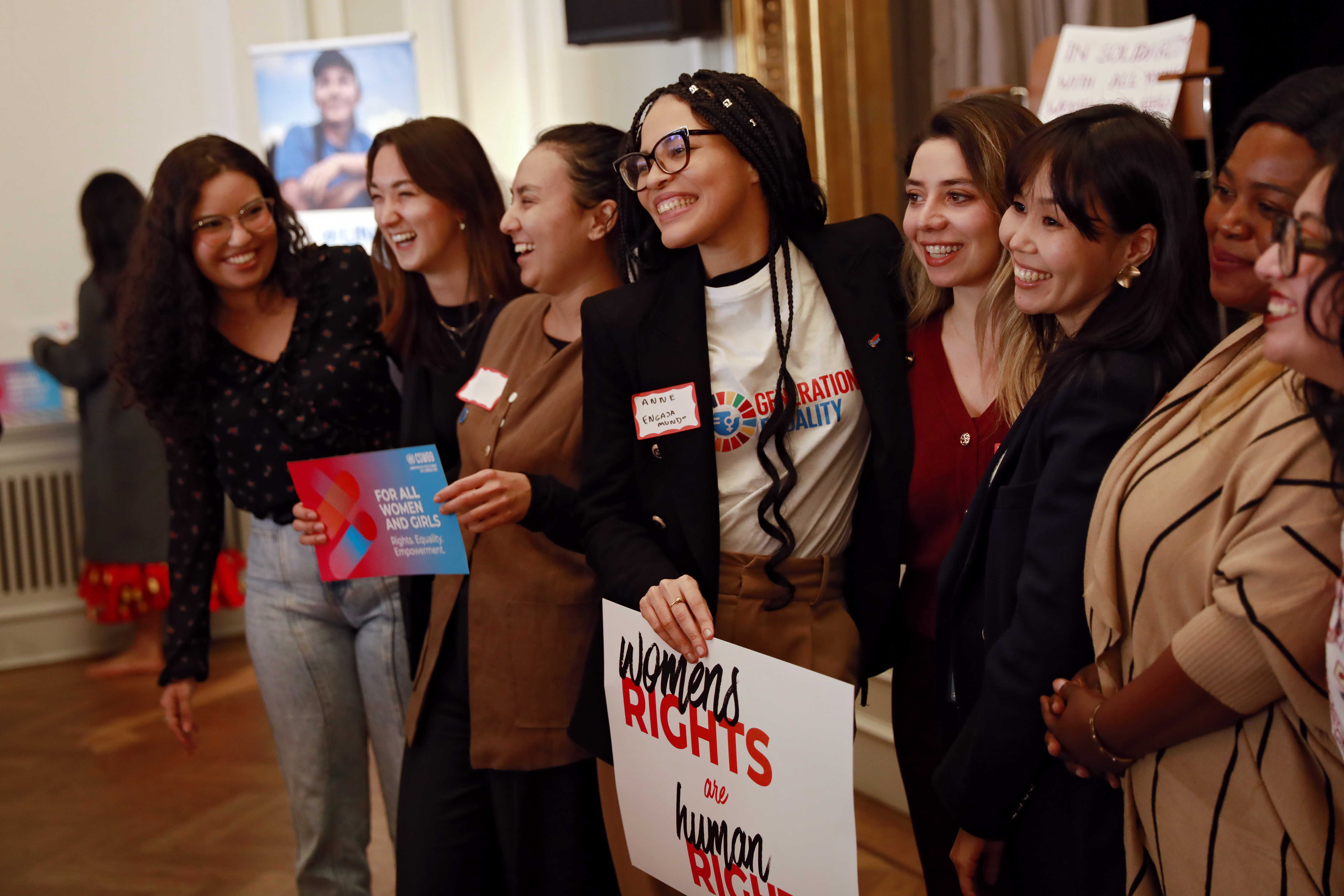
Youth leadership and intergenerational partnership strategy
Embedding youth leadership in national governance through Generation Equality platforms In Finland, engagement in Generation Equality led to the establishment of a Generation Equality Youth Group, coordinated by UN Women Finland and Plan International Finland, and formally linked to government action. The group advises decision‑makers, represents Finland in intergovernmental spaces and authors youth‑led policy proposals, including the Right to Be Online Manifesto addressing online gender‑based violence. This model enabled youth priorities to shape national positions while translating global commitments into domestic governance practice.