


2026 Financial Commitments Analysis
Executive Summary
As the deadline for the 2030 Agenda and its Sustainable Development Goals approaches, progress on gender equality is slowing amid intensifying global needs and declining official development assistance. In this context, the 2026 Generation Equality Financial Commitments Analysis takes a deeper look at the initiative’s financing dimension. Drawing on findings from the 2025 Financial Survey, as well as quantitative and qualitative data from previous reporting cycles, the analysis covers USD 50.3 billion in pledges and more than USD 21 billion in expenditures, as self-reported by Generation Equality partner organizations. It offers a granular view of financial flows, highlights uneven disbursement across stakeholder groups and regions, and examines how feminist financing models operate in practice. The report also assesses alignment with global frameworks, including the SDGs, Pact for the Future, FfD4, and the Beijing+30 Action Agenda, offering practical lessons to strengthen financing for gender equality and deliver results for women and girls.
Key Takeaways

Generation Equality remains a powerful multistakeholder partnership to sustain financing and accountability.

Financing is substantial but deeply uneven, and bureaucratic hurdles and rigid funding models limit impact where it is most needed.

Generation Equality is aligning delivery with global frameworks while strengthening resilience through partnership and adaptation.
Recommendations and Way Forward
-
Increase direct, flexible and predictable financing
Expand core, multi-year funding for feminist, youth-led and grass-roots organizations and reduce administrative barriers. Increase direct funding to local actors; strengthen co-financing models; and prioritize long-term investments in prevention and social norms change.
-
Reinforce data, monitoring and accountability systems
Establish standardized monitoring and evaluation frameworks across Commitment Makers, using intersectional, sex-disaggregated data systems, and include qualitative measures. Support independent verification and third-party evaluation.
-
Shift power to feminist movements and local actors
Ensure movements, youth-led groups, Indigenous women and Global South actors shape priorities, decision-making and accountability. Invest in political education and embed young activists and grass-roots leaders in governance structures. Prioritize sustainability over short-term projectization.
-
Build resilience to anti-rights backlash
Develop proactive strategies to counter anti-gender movements and shrinking civic space. Support legal protection, vigilance and safe digital infrastructure. Strengthen collaboration with religious and traditional leaders for social norms change. And provide long-term support for activists and grass-roots organizations in hostile contexts.
-
Strengthen governance, coordination and cross-regional solidarity
Institutionalize multi-stakeholder coordination at national, regional and global levels. Create regular peer-learning spaces and regional exchanges, including cross-regional convenings, solidarity platforms and communities of practice. Clarify governance roles and enhance transparency to maintain political and financial commitment. And keep Generation Equality principles embedded in broader global frameworks.
-
Keep Generation Equality principles embedded in broader global frameworks, and clarify its post-2026 road map
Define a clear vision and strategic direction for Generation Equality beyond 2026, including in SDG follow-up and multilateral reforms. Adopt mandatory reporting standards across Commitment Makers to simplify reporting. And align commitments with national priorities and domestic financing systems through localization plans.
Good Practices

Government of Kazakhstan extends childcare allowance payments to 18 months of age
Under the EJR AC, the Government of Kazakhstan’s USD 1.5 billion investment has produced clear and measurable outcomes for families across the country. In 2023, more than 300,000 families received benefits totalling approximately USD 630 million, and in 2024, over 270,000 families received about USD 860 million, with over 580,000 families benefiting from nearly USD 1.5 billion in total. By covering a longer period of parental leave, the reform improved household income security during a critical stage of child development. Following President Tokayev’s 2022 order, the reform was adopted through legislative amendments and enshrined in the Social Code of Kazakhstan in 2023. This strengthened systemic social protection and advanced gender equality by enabling women to extend parental leave without economic penalty and encouraging men’s involvement in caregiving. Over time, this systemic change is expected to strengthen women’s economic resilience, social protection coverage and equitable workplace participation, while recognizing the value of unpaid care work at the national level.
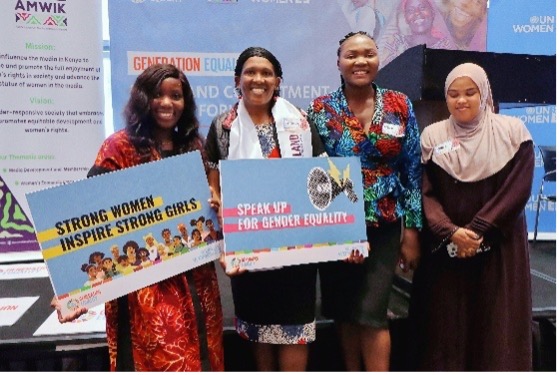
Gates Foundation Generation Equality investments catalyse system-level economic inclusion
Since 2021, as part of its commitment to scale solutions and increase economic empowerment under the EJR AC, the Gates Foundation has invested USD 437 million to expand access to economic opportunities for low-income women across India, Nigeria and East Africa (Kenya, the United Republic of Tanzania and Uganda). Through partnerships with India’s National Rural Livelihoods Mission, the Nigeria for Women Project and Kenya’s One Million Farmer Programme, investments supported over 13 million women to join self-help groups, enabling group-based savings, access to inclusive credit products and market linkages. For example, in India, the LokOS platform digitized individual credit histories for about 100 million women. In East Africa, the Foundation is piloting more inclusive, tailored credit products to expand access to nearly 1 million women entrepreneurs and developing, alongside financial institutions and fintech partners, interoperable data systems that improve women’s creditworthiness and unlock pathways to affordable, growth-oriented capital. The Foundation’s investments have strengthened the evidence base, leading to scaling of successful models and influencing how governments and financial institutions design for women.
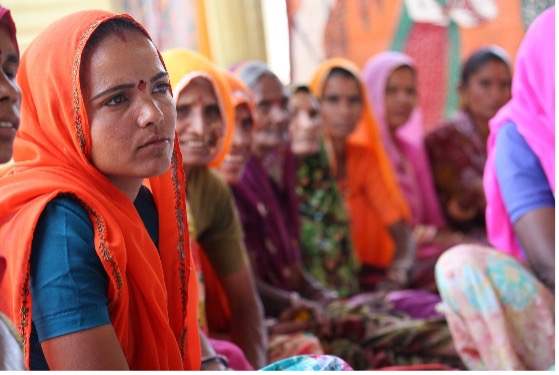
Amartha investments in women microentrepreneurs lead to policy shifts in lending systems
As part of its commitment to ensure prosperity for 5 million rural women under the EJR AC, by mid-2025, Amartha had disbursed IDR 35 trillion (USD 2.05 billion) in working capital to 3.3 million women microentrepreneurs across 55,000 villages in Indonesia. Forty per cent of these women were first-time entrepreneurs, and beneficiaries reported an average 69 per cent increase in income within a year. The initiative contributed to the creation of 156,298 new jobs in 2024 alone. Beyond direct livelihood outcomes, success at this scale demonstrates the importance of productive lending for women-led enterprises and reflects a broader policy shift underway in Indonesia’s peer-to-peer lending system.